Updated
Start with the right materials
Use double-walled cartons for anything heavy or fragile, and keep boxes small. A large box full of glassware is too heavy to handle safely and encourages stacking things that should not be stacked.
Use clean white packing paper or acid-free tissue against delicate surfaces. Newspaper transfers ink onto porcelain and glass, and you will be washing it off for a week.
- Double-walled cartons, small sizes for heavy or fragile items
- Clean white paper and acid-free tissue, not newspaper
- Bubble wrap for edges, corners and electronics
- Cell dividers for stemware and tumblers
- Strong tape and a marker for labelling all four sides
- Foam corners and boards for glass, mirrors and framed art
Glassware and stemware
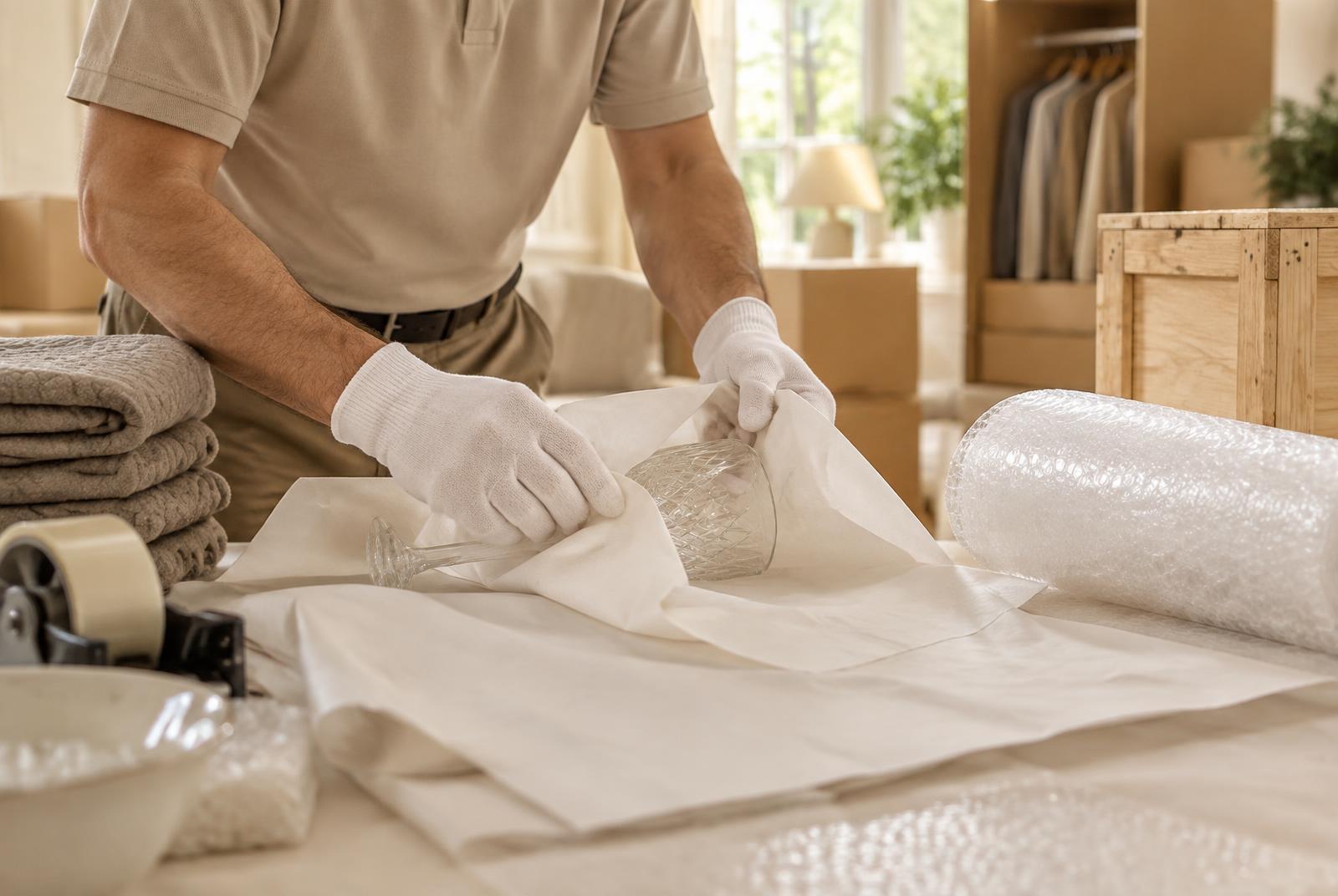
Wrap each piece individually. Lay the glass diagonally on a sheet of paper, roll, and tuck the ends into the bowl so the paper cushions the inside as well as the outside. Stems get an extra wrap of tissue.
Stand glasses upright in the box, ideally in cell dividers. Never lay stemware on its side; the stem is the weakest point and side pressure is exactly what breaks it. Pad the base of the box first, fill gaps so nothing can shift, and pad the top before closing.
Plates, bowls and porcelain
Plates travel vertically, on edge, like records in a rack. Stacked flat, the whole weight of the pile lands on the bottom plate every time the box is set down.
Wrap each plate in paper, then bundle three or four together and wrap again. Stand the bundles on a padded base with paper between them and the box walls. Bowls are wrapped individually and nested no more than two or three deep with paper between.
Mirrors, art and glass tops
Tape a large X across the glass face of a mirror or glazed frame. It will not stop a break, but it holds the fragments if one happens. Then wrap in paper, add foam corners, and sandwich between two sheets of cardboard or board.
Mirrors, art and stone or glass table tops travel standing on edge, never flat. Flat is how a top cracks when something is set down on it. Anything above roughly a metre in its longest dimension deserves a purpose-built crate rather than cardboard.
Electronics, lamps and the awkward things
Use original boxes where you still have them. Where you do not, use fitted cartons with foam, and photograph the cable layout at the back of a television or desk before unplugging anything. Bag each set of cables and label the bag with the device name.
Lamps travel with the shade boxed separately, wrapped in tissue, and the base wrapped like a vase. Candles, cosmetics and anything else that melts should never travel in a hot vehicle for hours — carry them yourself.
Label it so unpacking is short
Mark every fragile box on all four sides and the top, because a box is rarely read from above. Write the destination room and a short content note, and add a number if you are keeping an inventory list.
Do not overfill. A box should close flat without bulging, and nothing inside should be able to move when you tilt it gently. If it rattles, it is not finished.