
7 Tips to Declutter Your Home
Decluttering your home before moving doesn't have to be stressful. With a little planning and a clear strategy, you can sort through your belongings, reduce unnecessary items, and make packing much easier.
1. Start Decluttering Early
One of the common moving mistakes is leaving decluttering until the last minute. When moving day approaches, you may feel rushed and end up packing things you do not really need.
Ideally, begin decluttering three to four weeks before your move, or earlier if you have a large home. Start with one room or category at a time to keep the process manageable.
Create a simple schedule that allows you to work through your belongings gradually. Even spending 20-30 minutes a day sorting items can make a significant difference.
2. Sort Your Belongings Into Four Categories
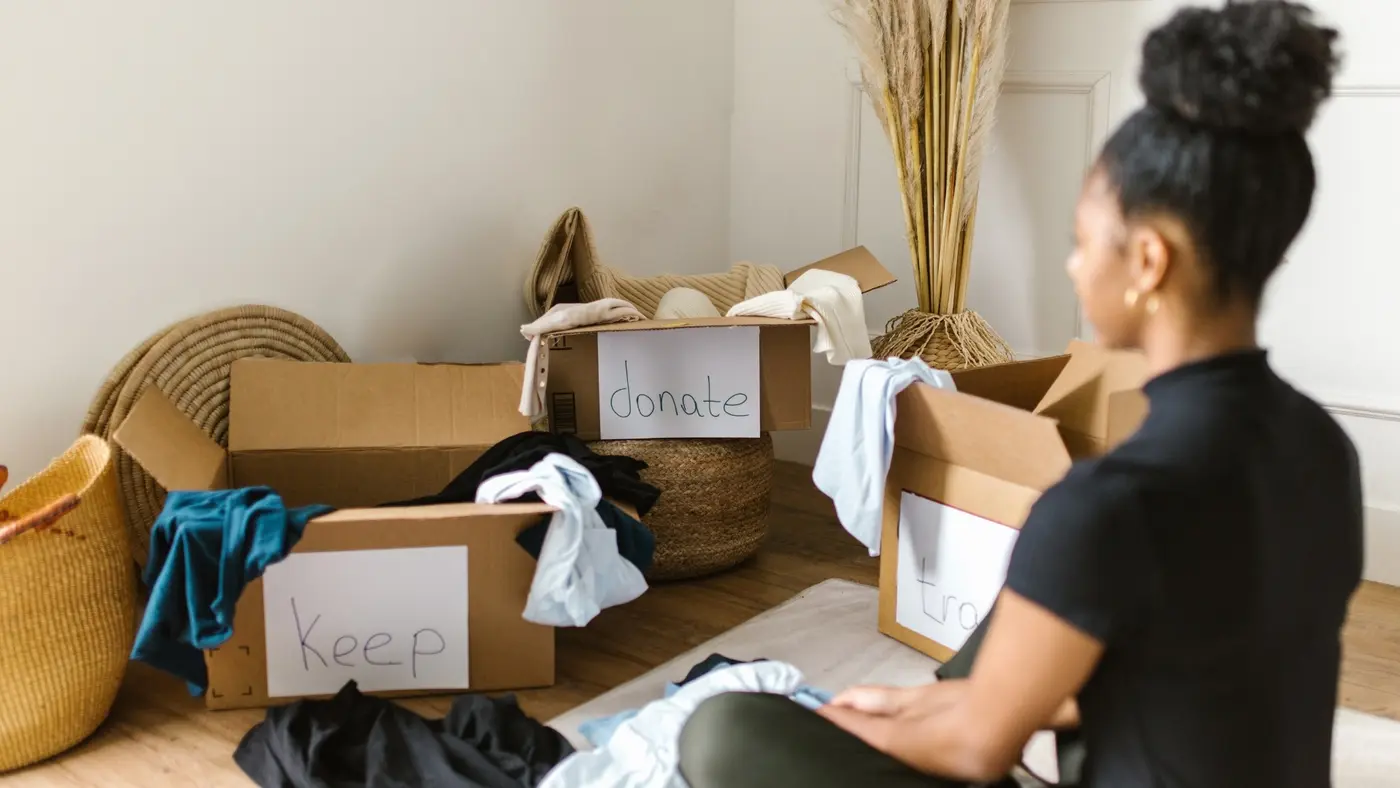
As you sort through your belongings, create four categories:
- Keep: Items you use regularly or need in your new home.
- Donate: Usable items that could benefit someone else.
- Sell: Valuable belongings you no longer need.
- Discard: Broken, damaged, expired, or unusable items.
As you go through each room, place every item into the appropriate category. If you're unsure whether to keep something, ask yourself when you last used it, whether it serves a purpose, and whether you would buy it again today.
This method helps you make clear decisions, reduce clutter, and avoid packing things you no longer need.
3. Declutter One Room at a Time
Trying to declutter your entire home at once can feel exhausting. Instead, focus on one room or one small area at a time. Here is a practical room-by-room approach:
Bedroom and Closet
Review your clothes, shoes, and accessories before moving. Remove items that no longer fit or suit your lifestyle. Keep essential and seasonal clothing, and donate or sell clothing you no longer need if it is in good condition.
Kitchen
Go through your cabinets, drawers, and pantry to identify unused utensils, outdated cookware, and expired food. Keep only the kitchen items you need, recycle suitable packaging, and pack essential kitchen supplies separately for easy access after moving.
Living Room
Review your furniture, decorations, books, magazines, and entertainment equipment. Remove unnecessary belongings and consider selling or donating bulky furniture that may not fit your new home or match your lifestyle.
Bathroom
Sort through toiletries, skincare products, medicines, towels, and bathroom cleaning supplies. Remove expired toiletries and skincare products. Return unwanted or expired medicines to an appropriate pharmacy or authorized collection point where available, and follow local disposal guidance.
Storage Areas
Check your garage, attic, storage room, and old boxes carefully. Keep useful belongings and donate, recycle, or discard unnecessary items. Sorting these spaces can reduce the number of items you need to pack, save time, and simplify your move.
4. Follow the One-Year Rule
A useful way to make decluttering decisions is to consider when you last used an item. If you have not used something in the past year, ask yourself whether you genuinely need it. For example, unused kitchen appliances, old decorations, and clothes that no longer fit may simply be taking up space.
However, this rule should not be applied blindly. Important documents, emergency supplies, seasonal equipment, sentimental keepsakes, and specialized tools may be worth keeping even if you rarely use them. The goal is not to get rid of everything you rarely use. It is to make room for the things that genuinely matter.
5. Digitize Documents and Reduce Paper Clutter
Paperwork can take up more space than you realize. Before moving, sort through old bills, receipts, manuals, letters, and personal documents.
Scan important papers that you do not need in physical form and store the digital copies securely. Keep essential original documents, such as identification papers, property records, legal documents, and certificates, in a clearly labeled folder that travels with you.
Shred paperwork containing sensitive personal information when it is no longer needed, and recycle ordinary paper where possible. Digitizing suitable documents can reduce clutter while making important information easier to find after your move.
Note: Ready to move with fewer belongings and less stress? Explore our guide on how to choose the best moving company in Dubai for helpful advice.
6. Measure Your New Home Before Packing
Decluttering is not only about deciding what you no longer need. It is also about making sure the belongings you keep will work in your new space.
If possible, review the layout and storage capacity of your new home before moving. Measure large furniture pieces, check doorways and room dimensions, and consider whether your existing furniture will fit comfortably.
For example, a large dining table may be practical in your current home but take up too much space in a smaller apartment.
Making these decisions in advance can help you minimize moving costs for furniture that will not fit or serve a useful purpose.
7. Create a Moving Inventory
Once you have decluttered, make a list of the belongings you plan to move. An inventory helps you estimate how many boxes you need and organize the packing process.
You can divide your inventory into categories such as:
- Furniture and large appliances
- Kitchen essentials
- Clothing and personal belongings
- Books and decorative items
- Important documents and valuables
- Items needed immediately after arrival
Label each box with its contents, destination room, and any special handling instructions, if needed. For example, write “Kitchen – Everyday Utensils” or “Bedroom – Winter Clothes.”
This simple step makes unpacking faster and reduces the chances of losing track of essential items.
Also Read:
What Is Included in a Professional Moving Service?
Do Movers Disassemble and Reassemble Furniture?
House Movers in Dubai: What to Expect and How to Book
How Professional Movers Can Simplify Your Move After Decluttering
Once you have decided what to keep, the next step is organizing the packing and logistics. Arranging building permits, booking service lifts, and preparing furniture for transport can take time, particularly when moving between properties in Dubai or other emirates.
BeMore Movers provides professional packing and moving services across Dubai and all seven emirates. Our trained crews handle furniture wrapping, transportation, and placement in your new home, helping you settle in with less hassle.
Planning your relocation early also gives you time to coordinate access requirements and discuss any special handling needs before moving day.
Get your fixed moving price on WhatsApp or call +971 50 133 4090 to arrange your free 10-minute video assessment and receive a fixed written quote the same day.